Introduction
In staffing, profitability lives where micro transactions meet finance: time entries, bill/pay rates, adjustments, commissions, and terms. Too often, these flows are handled in parallel systems and stitched together later—creating delays, errors, and blind spots.
This article shows how a Microsoft-first stack enables real-time financial workflows that improve accuracy, reduce cost, and deliver clearer margins.

The Traditional Approach:
Parallel by Necessity
Legacy back offices (e.g., older ERPs) often rely on:
- Limited APIs and file transfers
- Staging tables for bill/pay processing
- Overnight updates to reporting
- Manual reconciliation between ops and finance
This design makes sense for slow-moving businesses—but staffing compresses complexity into days and weeks, not months.
Real-Time Financials: What Good Looks Like
With a unified Microsoft architecture:
- Time captured in portals flows to bill/pay points immediately.
- Rates, terms, and commissions are tied to the same account/assignment records.
- Transactions post with true double-entry accounting into financial tables.
- P&L and balance sheet reflect activity the same day-no shadow ledgers.
Outcome: You see revenue, cost, and margin at the assignment level-and can act on it.
Why This Matters

Billing accuracy:
Fewer disputes when bill/pay calculations are consistent and transparent.

Faster close:
Real-time posting reduces month-end crunch and manual reconciliations.

Forecasting:
Live visibility into pipeline → assignments → realized revenue.

Compliance:
Auditable trails from activity to ledger without copy/paste workflows
Common Staffing Scenarios - Handled Natively
VMS transactions:
Processed without creating parallel datasets.
MSP contracts:
Terms embedded in the account/assignment model.
Pay-when-paid:
Financial logic sits in the platform, not bolted on.

Multiple cycles:
Weekly pay, bi-weekly billing, off-cycle adjustments—all tracked consistently.
Typical ROI Example
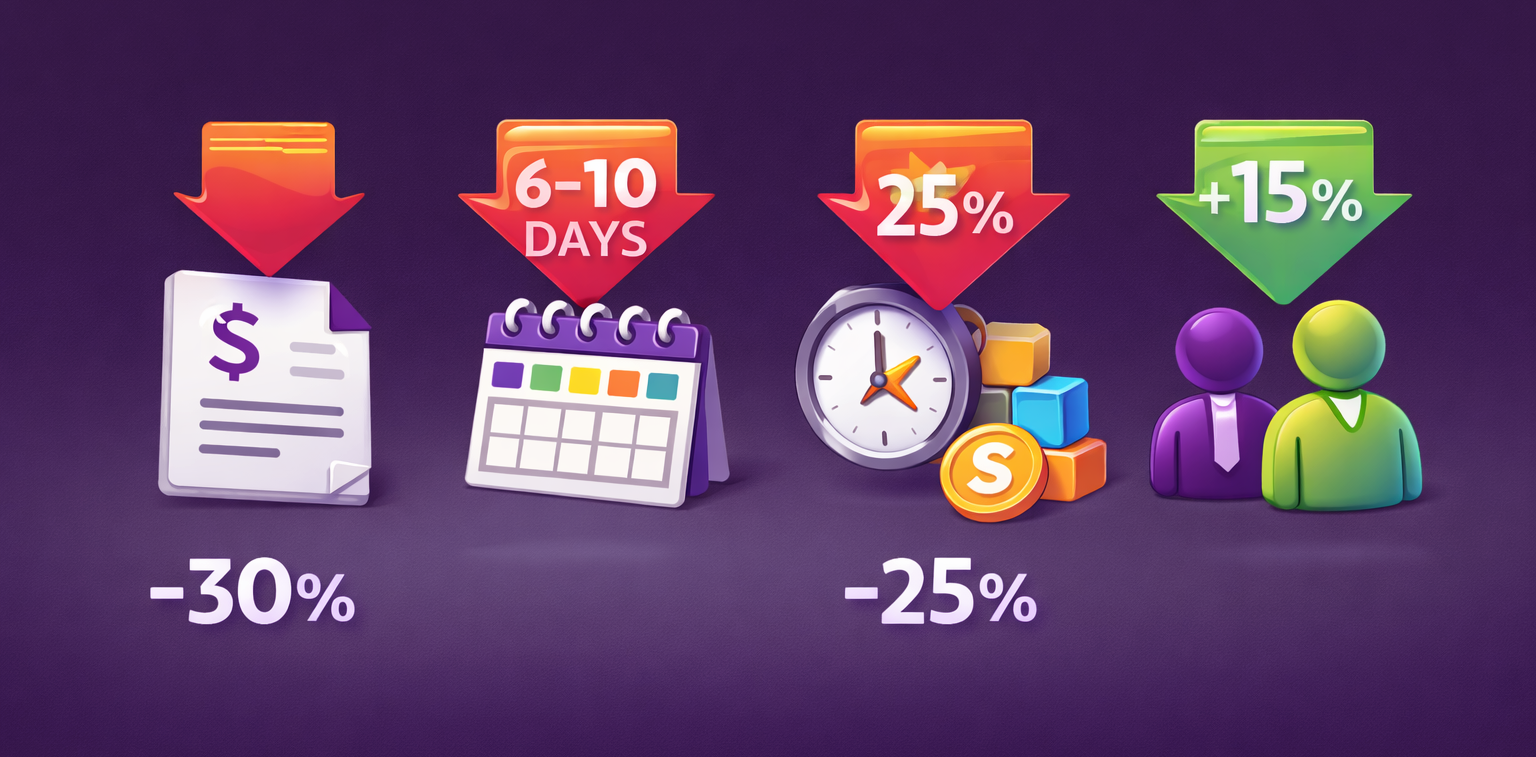
A national staffing firm moved bill/pay onto a Microsoft-first back office:
- Error rate in billing reduced by 30%
- DSO improved by 6–10 days through cleaner invoices
- Month-end close time cut by 25%
- Finance headcount held flat while volume grew 15%
Implementation Playbook

Map data ownership:
Accounts, assignments, rates remain in Dataverse.

Replace staging tables:
Use APIs for real-time posting to financials.

Automate exception handling:
Flag anomalies (missing approvals, rate mismatches).

Institutionalize governance:
Role-based access, audit trails, and approvals in the platform.
Conclusion
Real-time financial workflows aren’t a luxury; they’re how staffing maintains accuracy and margin at speed. When your operations and finance share one data core, you stop translating reality into spreadsheets—and start managing it in real time.
Ready to modernize your staffing operations with a Microsoft-first platform?
Let’s talk or book a demo.
More from the blog!
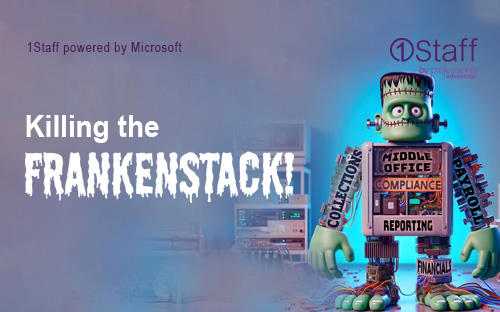
Stuck in a Maze of Systems?
In this blog, we’ll look at what a Frankenstack really is, why it’s so damaging to your financial operations, and how an integrated solution like 1Staff on Microsoft Dynamics 365 Business Central replaces chaos with clarity.
Read more...
From GP to Great
Reimagine Your Back Office with 1Staff 365
With Dynamics GP nearing end of life, now is the time to plan your next step. See how 1Staff 365 on Microsoft Dynamics 365 Business Central can modernize your back office with automation, flexibility, and measurable savings.
Read more...