We’ve been going to SIA Executive Forum for a long time. The mood in the room changes year to year and you get a feel for it pretty quickly — not from the slides, but from the conversations in the breaks and the energy around the keynote.
This year in Austin felt different to the last couple

The last eighteen months in this industry were dominated by one conversation: AI. What it would do to recruiting, to headcount, to the whole model. Some of that was substantive. A lot of it was noise — SIA’s own speakers acknowledged as much, noting that AI had become a convenient narrative for underperformance at some of the larger players. The tech layoff headlines looked dramatic but Meta, Alphabet and Amazon all grew headcount through the same period. The story was more complicated than it appeared.
What the room was talking about in Austin felt more grounded. The keynote opened with growth forecasts for 2026 and 2027 — 2% each year, modest but the right direction after consecutive years of decline. SIA also launched a new Staffing Confidence Index at the event, backtested to 2020, sitting at 116 in March against a baseline of 100. Executives in the room were projecting 128 for the half year. None of that is euphoria. It’s people who’ve had a difficult few years starting to look forward again.
The data point that generated the most discussion in our conversations was this: staffing firms running connected end-to-end systems are outperforming the market by around 10% in revenue generation. SIA put that number on the slide with sector breakdowns — 34% of healthcare firms on a unified platform, 27% in IT, 29% in industrial.
Which means the majority aren’t. They’re still running separate front office, back office and payroll systems with integrations holding it together. That’s not a new problem but it’s an increasingly expensive one, and the performance gap is now showing up in independent benchmarking.

IT staffing is worth watching separately. It’s at around +1% for 2026 after two down years, which is stabilisation not recovery. The growth in that segment is in solutions and consulting — digital transformation projects, cloud, the kind of work that doesn’t move offshore as easily. For IT staffing firms the platform conversation has shifted. It’s less about what a system can do for growth and more about what it can take off the operational overhead. Margin is the priority.
On technology spend more broadly: SIA benchmarking shows IT budgets per employee rising consistently and nearly two-thirds of staffing firms planning to increase spend over the next twelve months, with software prioritised over headcount. Firms that deferred platform decisions through the downturn are coming back to that conversation.
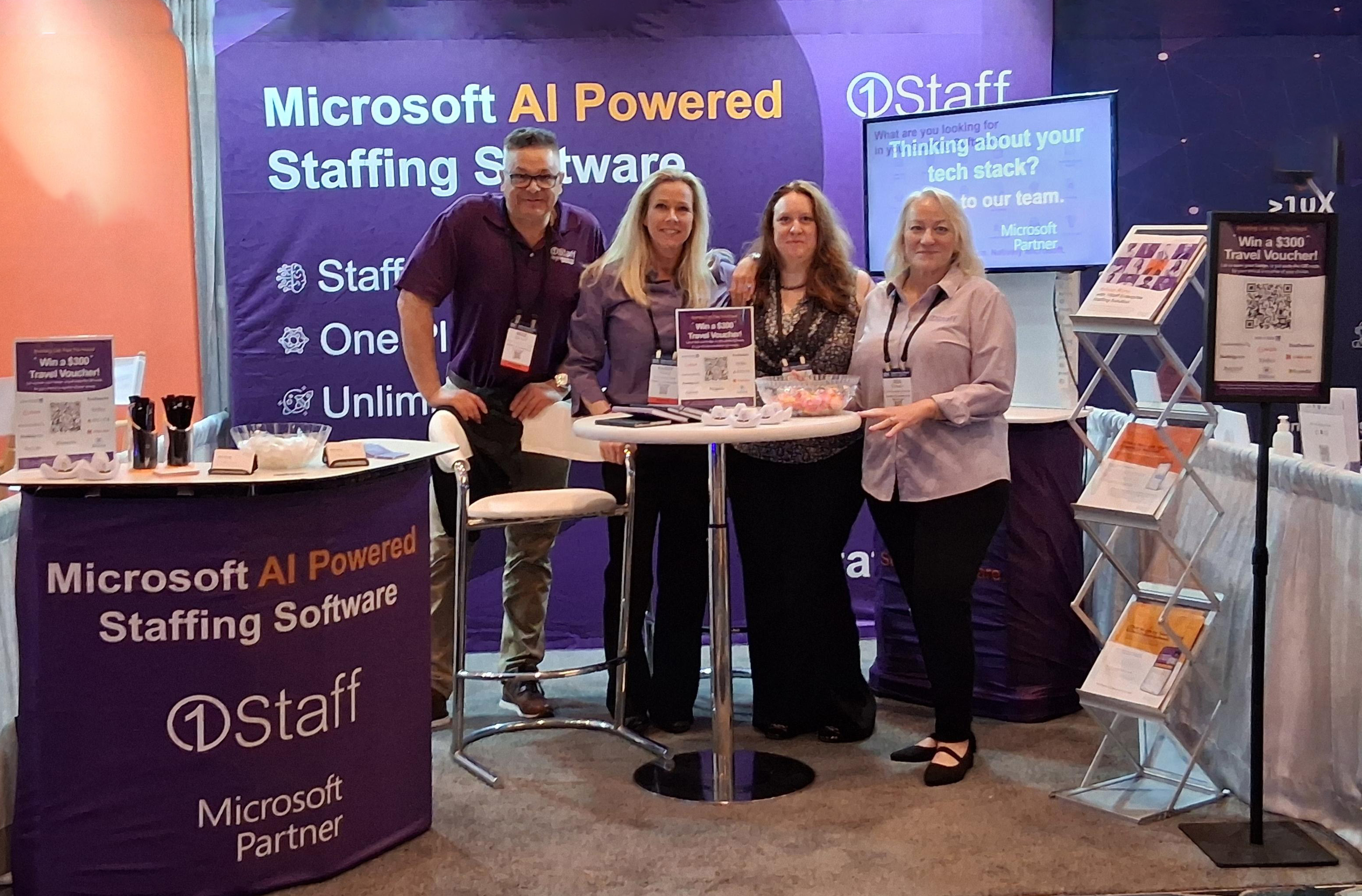
The booth reflected it — more active, more specific, less exploratory than the last couple of years.
The AI conversation isn’t going away, but in Austin it felt like it had found its proper place — one factor among several, not the only lens. The firms doing well are the ones with better operational foundations. That’s what the data shows and it’s what the conversations felt like.
Bridge to the Cloud 3
Key Dates for 2026–2027
Microsoft has announced Bridge to the Cloud 3 (BTC3), a time-limited licensing promotion for organizations still running Microsoft Dynamics GP and planning a transition to the Microsoft cloud.
Read more...
More from the blog...
Killing the Frankenstack!
Why Your Back Office Architecture Is Holding You Back!
Killing the Frankenstack!