Healthcare Staffing Software.
Financial and compliance infrastructure for travel nursing, locum tenens, allied health, and international nurse staffing programs.

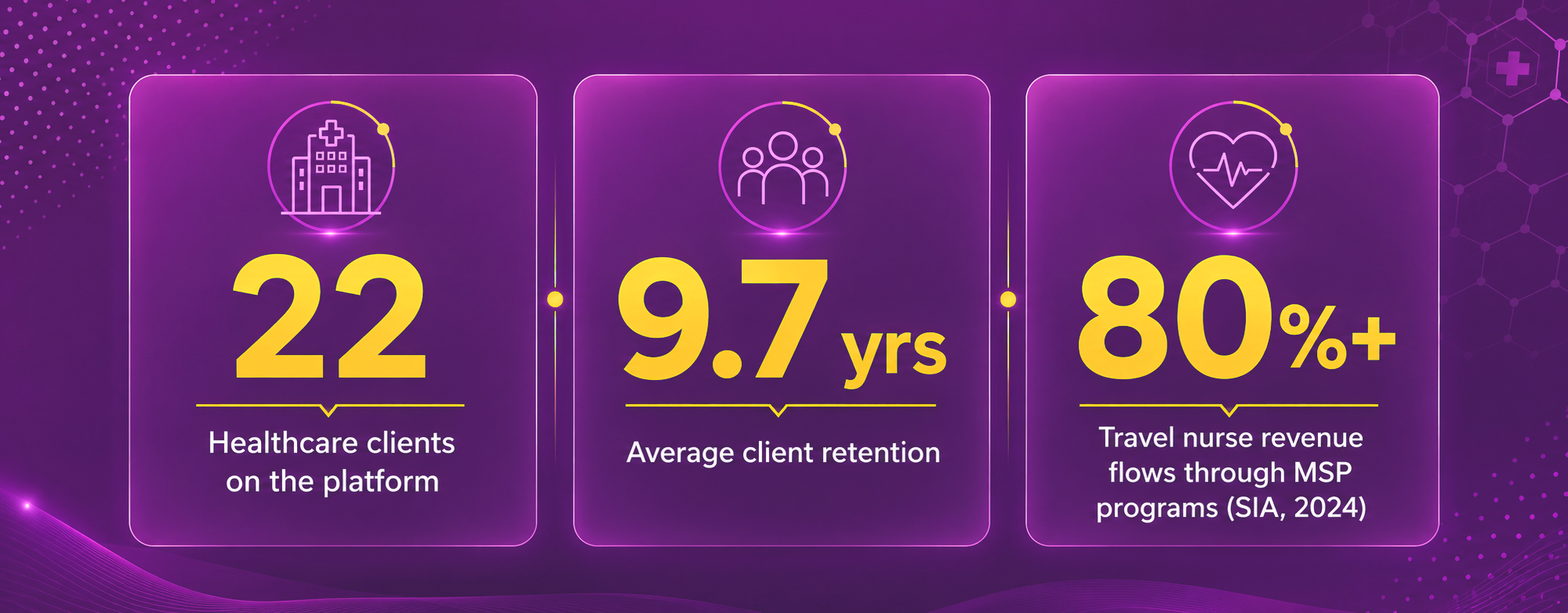
Healthcare staffing is the highest-complexity billing environment in the industry. Pay rules and bill rules rarely share the same logic. Credentialing has its own clock. And for travel nursing, more than 80% of revenue flows through managed programs where the invoice you send is validated, adjusted, and processed by a VMS before it reaches the buyer’s accounts payable team.
Most healthcare staffing firms are not looking for a scheduling system. For 13-week travel nursing assignments, the facility manages the schedule once a nurse is placed. The agency’s job is placement, credentialing, contract billing, and pay package calculation — and that is precisely where 1Staff is built.
1Staff is a native part of the Microsoft architecture. Front office and back office are connected applications that stay in step as work happens — not separate systems syncing overnight.
Front Office: ATS, CRM, and Candidate Engagement
Recruiters in healthcare staffing manage relationships across a pool of clinicians who may work multiple contracts, move between specialties, or sit in credential status somewhere between ready and pending. The front office has to hold all of that in one place.
For mid-market firms running a fragmented stack — ATS from one vendor, financials from another, compliance tracked in spreadsheets — 1Staff replaces all three. For firms already running a mature front-office system, 1Staff works as the financial and compliance layer behind it. Either way, the strongest reason to evaluate 1Staff starts with the back-office and billing capabilities described below.
ATS on a true CRM
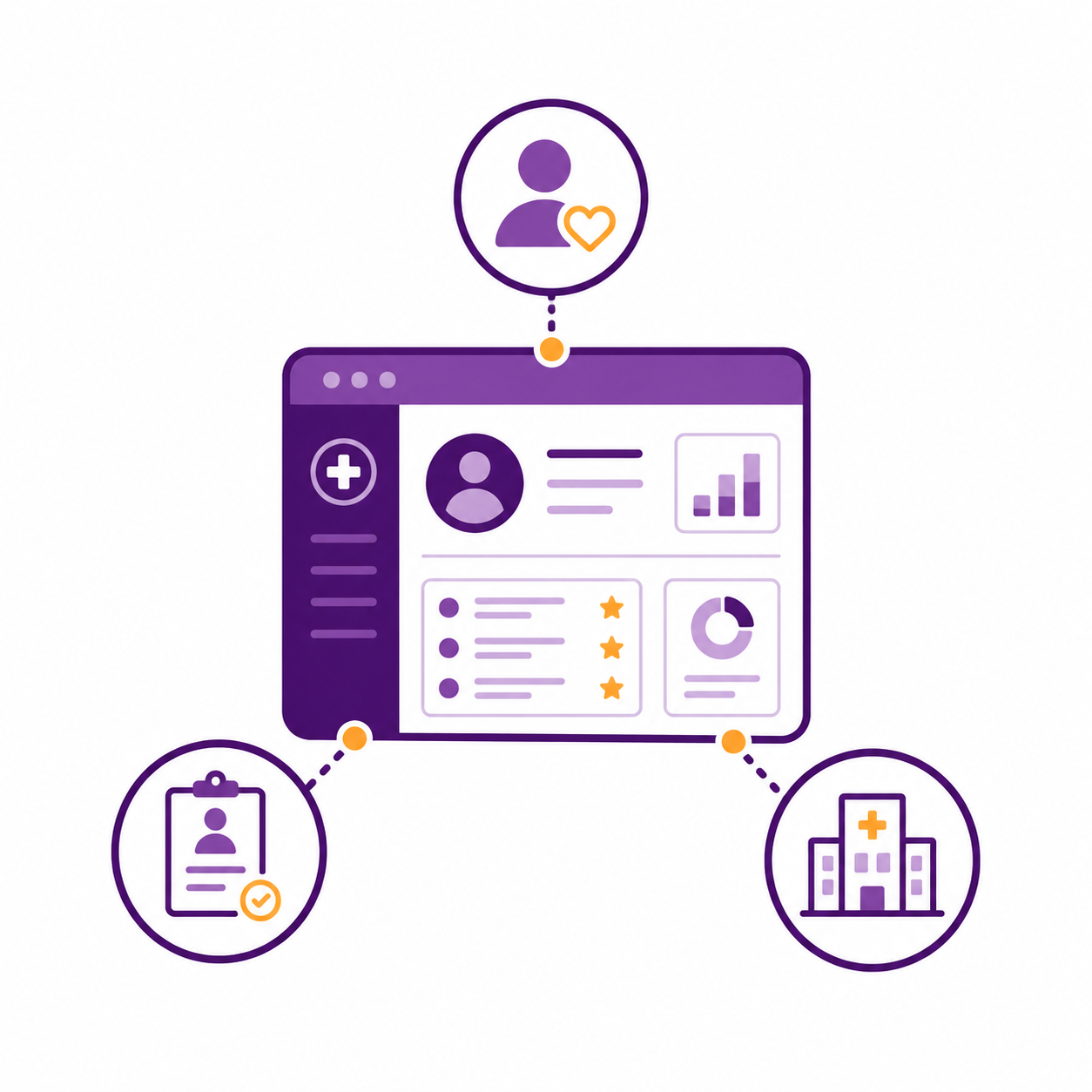
Applicant tracking, job orders, client relationships, and the sales pipeline are all part of the same Microsoft environment. Recruiters work from a single screen. Business developers see placement activity, job order status, and account health without leaving their CRM view.

AI chatbot & candidate automation
AI chatbot handles first-touch candidate engagement, qualification, and job matching around the clock. Personalized candidate journeys run on status, availability date, credential expiration, or engagement activity. Recruiters step in when the conversation is ready.
Mobile-first worker experience
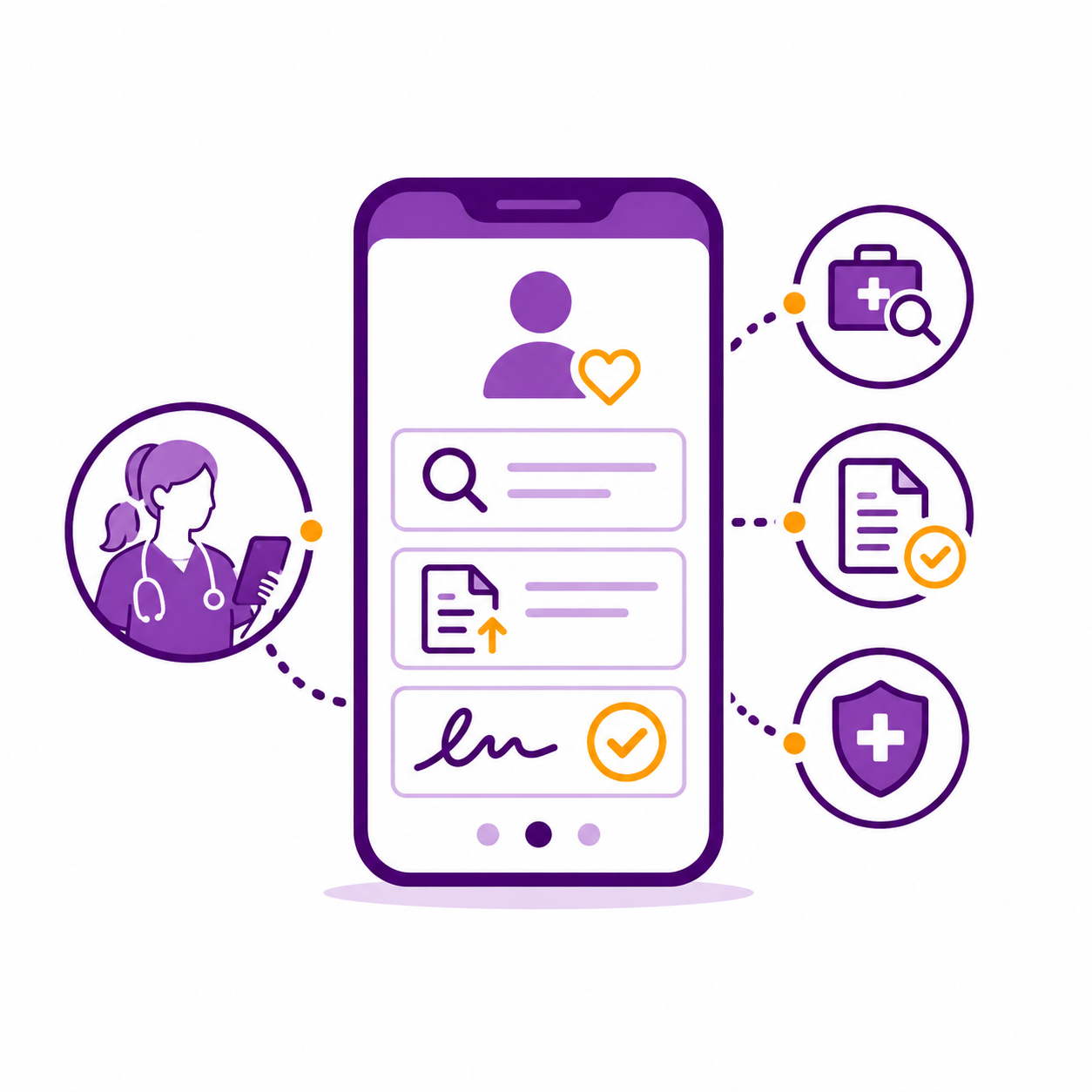
Clinicians search jobs, upload credential documents, review and sign onboarding packages, and submit availability from their phone. Built for a workforce that is frequently remote, between assignments, or on site where desktop access is not the norm.

Sales and marketing automation
Account expansion campaigns run from the same platform as candidate outreach. Marketing lists built from placement history and contract status. New business journeys and account nurture run in parallel.
Compliance and Credentialing
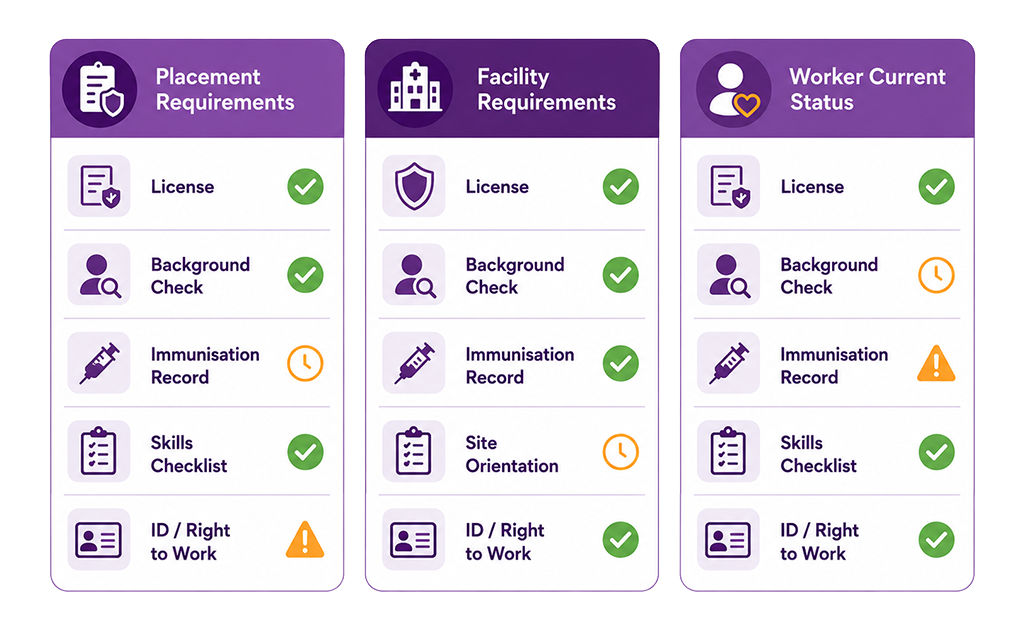
For travel and locum placements, credentialing is the placement. An expired license, a missed background check currency date, or a lapsed immunization record stops a worker going to site. 1Staff tracks credential requirements at three levels simultaneously: what the placement requires, what the specific facility requires, and what the individual worker currently holds.
Automated renewal reminders trigger before expiration. Credential workflows are configurable by placement type — a travel nursing onboarding package looks different from a locum physician engagement, which looks different again from an allied health credential set. eSign is embedded for onboarding documents. Role-based access keeps the compliance team’s data separated from billing and payroll. A full audit trail comes as standard.
Mixed Workforces: Locums, Travel, Allied, and Managed Programs
One platform, multiple workforce types
A firm may run locum physician placements alongside a travel nursing program and a growing allied health division — each with different billing structures, different credential requirements, and different payroll complexity. 1Staff handles all of this within a single Business Central environment. There is no second system for locums, no separate database for allied health.
Locum tenens complexity
Locum placements carry the highest per-placement financial complexity in staffing. Multi-state physician licensing runs three to six months and must be tracked against assignment start dates. Malpractice insurance must be allocated per contract. 1Staff’s rules engine handles pay and bill independently, so the pay structure for a locum physician arrangement can sit alongside a travel nurse contract in the same firm without cross-contamination of rules.
MSP supplier agility: turning assignments on a dime
For healthcare firms operating as MSP program suppliers, contract continuity is a live operational pressure. When a managed program renegotiates rate cards, restructures its supplier tiers, or moves VMS platforms — a pattern that has accelerated as enterprise health systems reassess their technology contracts — assignments need to be amended and workers need continuity. Payroll cannot gap. Invoicing must reflect the new terms from the amendment date.
1Staff’s assignment architecture supports mid-contract changes without requiring a worker to be offboarded and recreated. Rate amendments apply from a specified date. Billing rules update at the amendment point. The worker’s credential record, placement history, and payroll continuity are preserved.
“1Staff automated several key processes which allowed us to keep the same number of support staff as we grew 4x over three years.” - 1Staff Client
Pay and Bill: Independent Pipelines
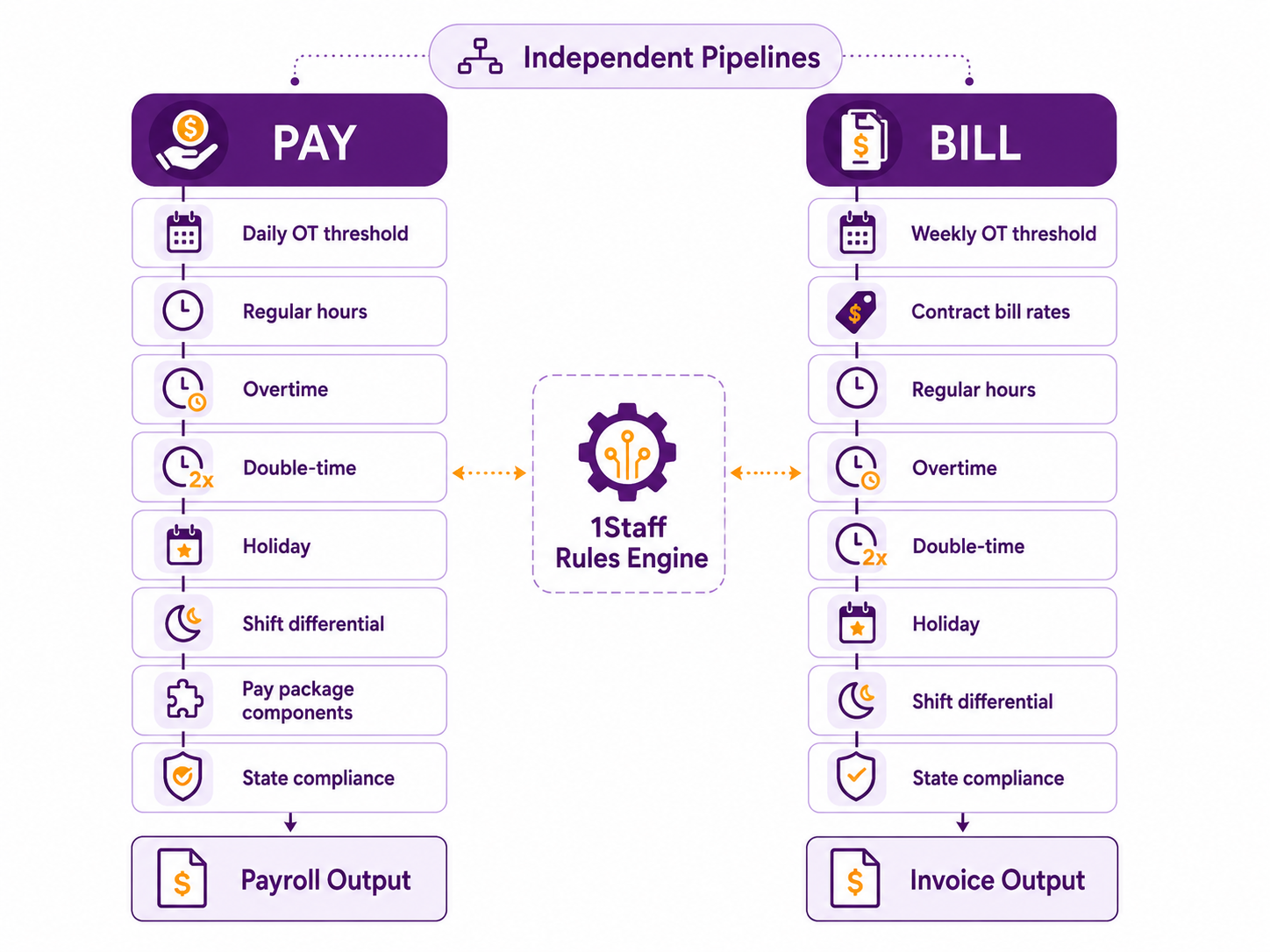
Travel nursing operates under compliance rules that affect pay and bill differently. Daily overtime obligations apply to pay in certain states. Bill rates are typically weekly, contractually defined, and independent of how hours fall across the working week. These are not the same calculation, and running them through a single shared pipeline will get one of them wrong.
It is worth being direct about why 1Staff is the right answer for travel nursing specifically: the agency does not schedule shifts. Once a nurse is placed on a 13-week assignment, the hospital nurse manager controls daily scheduling. The agency’s job is placement, credentialing, pay package calculation, VMS billing, and financial management. That is the problem 1Staff is built to solve. No shift-scheduling capability is needed — and no competitor’s shift-scheduling capability changes the pay/bill calculation problem one bit.
1Staff runs pay and bill through independent pipelines. The rules engine processes each side separately — regular hours, overtime, double-time, holiday, shift differentials, and pay package components are all calculated against the correct rule set for each dimension. State compliance rules apply per assignment based on work location, not the agency’s home state.
VMS Reconciliation: 1Staff Streams
When the majority of revenue flows through managed programs, the reconciliation burden is material. The bill you submit to a VMS doesn’t come back in the same shape. Bill codes need mapping to internal pay types. Adjustment records need matching. The VMS may apply program fee deductions before transmitting data. All of this has to land correctly in the financial record.
1Staff Streams ingests VMS files through a validation pipeline. Bill codes map to internal pay types. Duplicates and corrected resubmissions are detected automatically. Exceptions are grouped and routed for resolution, and invoice batches are assembled from validated records. Pay rates always come from the assignment record — never from the VMS file. That boundary is enforced at the architecture level, not as a configuration choice.
Streams runs in two modes. Validated mode blocks import on any unmapped code or discrepancy — for environments where clean data is the rule. Permissive mode logs exceptions and continues — for high-volume operations where deferred resolution is the operational model. Both maintain a complete audit trail.
COMING SOON: Automated VMS receipt matching and rate discrepancy detection are in active development as the next layer of Streams capability — closing the gap between ingestion and full cash reconciliation.
On the Roadmap: SOW and Milestone Billing
Near-term roadmap — not current capability
SOW and milestone billing are in active development as a Business Central extension. If your firm manages fixed-fee project engagements, milestone-based invoicing, or retainage structures, speak to us about development timeline and fit for your business.
SOW now represents 35–39% of all MSP program spend. Healthcare firms with professional services or consulting-adjacent work are increasingly asked to invoice against deliverables rather than hours. Standard time-and-materials billing engines can’t handle this — the invoice trigger, the amount, and the supporting documentation requirements are structurally different. 1Staff is building this capability natively on Business Central.
The Platform
1Staff is a native part of the Microsoft architecture. Front office and back office are both Microsoft applications — connected, running in the same environment, with no third-party middleware between them. Power Platform connects both. Microsoft Copilot is available across the environment. One login, one security model, one audit trail — from first candidate touch to posted invoice.
Not every 1Staff client uses the full stack. Some come for the financial and billing layer behind an existing front office. Some come for compliance and credentialing. Some replace everything. The right starting point depends on where the pain is. If the pain is VMS reconciliation, margin visibility, or pay/bill complexity, that is where the conversation begins.
Find out how 1Staff brings recruiting, compliance, credentialing, pay/bill, and financials together on one Microsoft-powered platform.
Ready to simplify your healthcare staffing operations?
More from 1Staff Staffing Software

Frequently Asked Questions | FAQs
How does 1Staff help healthcare staffing firms reduce manual work?
1Staff helps reduce manual work by connecting recruiting, credentialing, onboarding, time capture, pay/bill, invoicing, reporting, and financials in one Microsoft-native platform. Automation can help with reminders, approvals, candidate engagement, document workflows, and VMS exception handling.
Is 1Staff built on Microsoft Dynamics 365?
Yes. 1Staff is built on Microsoft Dynamics 365 and Business Central, with front office, compliance, pay/bill, financials, reporting, and automation connected through the Microsoft platform.
How does 1Staff help with healthcare credentialing?
1Staff tracks credential requirements by placement, facility, and worker status. It helps manage license checks, immunization records, background checks, document expiry dates, renewal reminders, eSign documents, and audit trails.
Is 1Staff built for travel nursing and locum tenens staffing?
Yes. 1Staff supports complex healthcare staffing models, including travel nursing, locum tenens, allied health, and mixed healthcare workforces, all within one connected platform.
What is healthcare staffing software?
Healthcare staffing software helps staffing firms manage the full placement lifecycle for healthcare workers, including recruiting, credentialing, onboarding, compliance, time capture, pay/bill, invoicing, and reporting.
What is 1Staff 365?
1Staff 365 is an AI-powered staffing platform built on Microsoft Dynamics 365. It unifies front, middle, and back office operations for staffing and recruitment firms.
Who is 1Staff for?
1Staff is purpose-built for staffing agencies of all sizes that want to streamline operations, improve compliance, and grow their business using Microsoft-powered tools.