The American Staffing Association just dropped their annual trends report, and if you haven’t read it yet, the short version is: things are getting more complicated before they get easier. Economic uncertainty, AI pressure, tighter competition, a skills-based hiring shift, and state-level tax changes all made the list. We read through it carefully, and a few things stood out — not just as trends, but as operational signals that staffing firms probably need to take seriously right now.

The temp surge is coming, and your back office needs to be ready for it
The first trend in the report is about economic caution driving companies toward temporary staffing. When employers are nervous about permanent headcount, they lean on staffing firms. That’s good news for volume — but volume is only profitable if your operations can handle it.
Here’s the thing that doesn’t get talked about enough: the firms that struggle when business picks up aren’t usually the ones with a recruiting problem. They’re the ones with a billing problem, a payroll problem, a compliance backlog. If your back office is still running on manual workarounds or a system that doesn’t talk to your front office, a 30% spike in placements doesn’t feel like a win — it feels like chaos.
This is exactly where AI agents are starting to change the equation. Not AI in the “chatbot on your website” sense — but agents embedded inside your operational workflow that can handle timesheet exceptions, flag billing discrepancies, and surface compliance issues before they become problems. Payroll administrators who used to spend hours reconciling can let an agent handle the routine and focus on the exceptions. That kind of operational leverage matters enormously when volume spikes fast.



AI is becoming table stakes — but the “which AI” question matters a lot
The report is clear that AI adoption is no longer optional for staffing firms. Faster sourcing, better screening, more scalable candidate engagement — these aren’t differentiators anymore, they’re expectations.
What the report doesn’t dig into is the implementation gap — the difference between layering a standalone AI tool onto an already disconnected tech stack versus having AI that actually works within your existing workflow.
Microsoft AI, Copilots, and agents are embedding across every role — and into the workspaces where your people actually live: Teams, Outlook, and 1Staff on Dynamics 365. For your sales team, your recruiters, and the people who oil the wheels behind your operations, that’s not a future consideration. That’s already happening.
A Copilot that can summarize a candidate call, draft a follow-up, update a record, and flag the next action — all without leaving the screen they’re already on — is genuinely useful. A separate AI tab that requires copy-pasting between systems is mostly friction with a marketing budget.
For staffing firms already running on a Microsoft-native platform, this distinction is already paying off. The AI your recruiters and account managers use every day gets smarter as the platform gets smarter. There’s no integration project required every time Microsoft ships something new.

The firms that win on value need the operations to back it up
Trend three hit closest to home for us. The report talks about competitive pressure forcing staffing firms to move from order-filling to genuine workforce consulting. It’s a compelling argument — and we agree with it. But here’s an honest observation: it’s very hard to be a strategic advisor to your clients when half your team’s day is spent reconciling timesheets or chasing invoices.
The firms that will actually pull off the “workforce partner” positioning are the ones with enough operational efficiency to free their people up for that higher-value conversation. A sales manager who gets AI-assisted account insights before walking into a client meeting is having a different conversation than one who spent the morning pulling reports manually. That gap is widening, and the firms who feel it most are the ones whose tech stack isn’t keeping pace with their ambitions.


Skills-based hiring sounds simple, but the compliance complexity is real
The shift away from degree requirements toward skills and trainability is genuinely good news for staffing firms — more flexible candidate pools, more placement opportunities, more creative role design. But it adds compliance surface area. More varied placement types, more credentialing to track, more variation in what “qualified” means from client to client.
The compliance burden goes up even as the hiring criteria gets looser. Firms that have AI assistance built into their compliance workflows — flagging missing credentials, surfacing expiring certifications, prompting the right steps at onboarding — are going to handle this more cleanly than firms where compliance is still a manual checklist someone might forget to run.

State tax changes aren’t dramatic yet — but they will be
The report flags this one as an emerging risk rather than a current crisis, which is probably the right framing. But the direction is clear: states are looking for revenue, and services taxes are on the table. Washington State already moved. Maryland tried to.
For staffing firms operating across multiple states, this adds yet another layer to an already complex payroll and billing environment. Having a back office that can adapt to new jurisdictional rules without requiring a manual intervention every time something changes isn’t a luxury anymore — it’s increasingly a baseline expectation.
None of these trends are entirely new.
But the ASA report is a useful reminder that the operational pressures are converging — more volume potential, more AI expectation, more compliance complexity, more competitive intensity, all at the same time. The firms that navigate 2026 well probably won’t be the ones who worked harder. They’ll be the ones who had the infrastructure to work smarter.
If any of this resonates — or if you’re not sure whether your current platform is set up to handle what’s coming — we’re happy to have a real conversation. No pitch deck required.
Bridge to the Cloud 3
Key Dates for 2026–2027
Microsoft has announced Bridge to the Cloud 3 (BTC3), a time-limited licensing promotion for organizations still running Microsoft Dynamics GP and planning a transition to the Microsoft cloud.
Read more...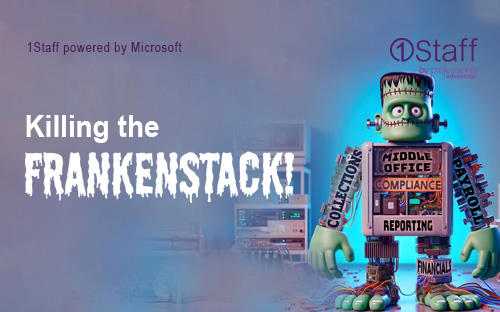
More from the blog...
Killing the Frankenstack!
Why Your Back Office Architecture Is Holding You Back!
Killing the Frankenstack!