Floating shifts, differential rates, multi-state rules, VMS billing structures — when this logic lives in different places, the numbers stop agreeing. We're building a centralized rules engine that handles the complexity once, and applies it consistently whether time enters through Back Office, Time, Streams, or Front Office.

Three dimensions. One engine.
Commercial
Rate cards, client-specific terms, VMS programme structures — all calculated through the same service.
Legislative
Multi-state OT regimes — California, Nevada, and beyond — applied automatically by work location, from placement through to pay run.
Source
Timesheet, VMS file, or placement event: same rules, same result. VMS billing codes and payroll calculations stay in separate pipelines — structurally, not by configuration.
When rules live in silos, complexity wins
Different time sources trigger different logic. A placement priced correctly against one set of rules produces a different result when VMS billing, state OT, and shift differentials each apply their own calculation independently.
What breaks
Rules configured in multiple places drift over time — calculations diverge and compliance updates require repeated changes across systems.
What it costs
More exceptions, more manual checks, slower close, and margin visibility that arrives too late to act on.
What changes
Define rules once. Apply them consistently across every touchpoint — time entry, VMS ingestion, placement, and billing.
Rules earlier in the lifecycle
The same engine extends upstream — giving recruiters indicative pay, bill, and margin visibility at placement, before a timesheet exists.
Placement
Indicative pay/bill/margin
Time entry
Rules applied on submission
VMS ingestion
Same rules, same result
Pay/bill run
No surprises at close
Lifecycle expansion to placement events is planned for later this year and is subject to change.
The Margin You See at Placement Should Be the Margin You Keep.
Most staffing platforms calculate pay at the point the timesheet runs. By then, the placement decision is already made. The problem is that floating shifts, differential rates, multi-state rules, and complex pay structures don't announce themselves at pricing — they surface later, after the margin has already been quoted and the worker is on assignment.
We're completing a rules engine that handles this complexity at the point it matters: placement. Floating shifts, shift differentials, timestamp-dependent calculations, and multi-state pay rules — applied before a timesheet exists, so recruiters see a margin figure that reflects what the rules will actually produce.
What the engine handles
Floating shifts and shift differentials applied by time of day, day of week, and facility type. Timestamp-dependent OT calculations across multi-state assignments. Taxable and non-taxable stipend splits. Credential-based rate tiers. VMS billing code mapping independent of pay calculation.
Where we are
The engine handles these scenarios. We're finalizing the integration to Back Office and Time. We're working with a small number of firms now to complete this against real-world complexity — if this is the problem your recruiters are living with, we'd like to show you what we have.
More from the blog...
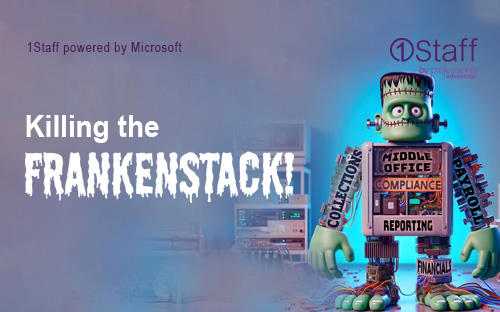
Killing the Frankenstack!
Why Your Back Office Architecture Is Holding You Back!
Killing the Frankenstack!
Bridge to the Cloud 3
Key Dates for 2026–2027
Microsoft has announced Bridge to the Cloud 3 (BTC3), a time-limited licensing promotion for organizations still running Microsoft Dynamics GP and planning a transition to the Microsoft cloud.
Read more...